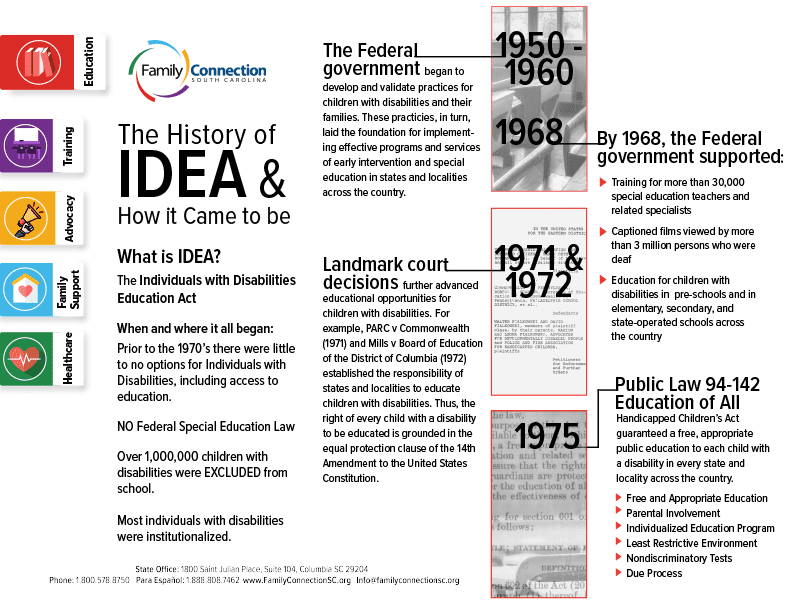
This educational tip sheet provides a clear, visual overview of the history and evolution of the Individuals with Disabilities Education Act (IDEA), helping families and professionals understand how special education rights were established in the United States. It begins by describing conditions prior to the 1970s, when children with disabilities were routinely excluded from schools and had few legal protections. The document traces the advocacy efforts, landmark court cases, and early federal involvement that laid the groundwork for equal access to education and the development of effective practices for children with disabilities and their families.
The tip sheet then outlines key legislative milestones, including the passage of Public Law 94-142 and its transformation into IDEA, highlighting foundational principles such as free and appropriate public education, parental involvement, individualized education programs, least restrictive environment, and due process. It also explains how later amendments expanded services to younger children, strengthened family–school partnerships, and introduced progress reporting requirements. Designed as a concise historical reference, this resource helps readers understand why IDEA exists today and how ongoing advocacy continues to shape educational rights and services for students with disabilities.