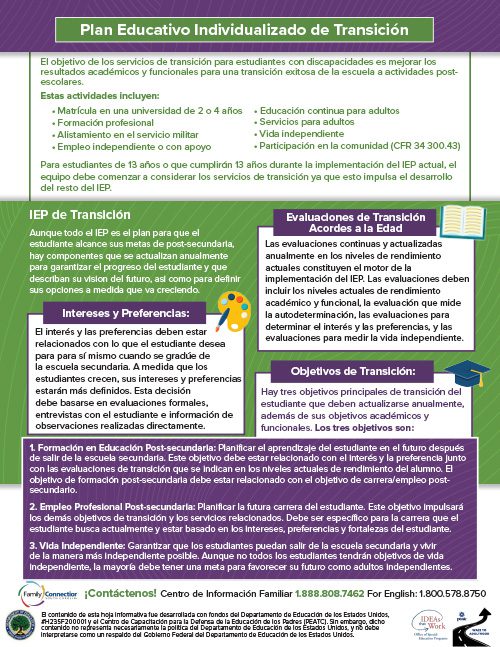
In Spanish.
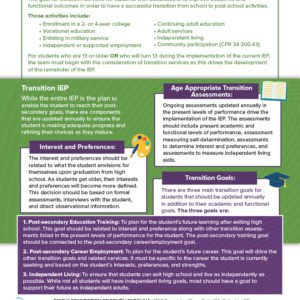
This fact sheet explains the purpose and structure of a Transition Individualized Education Program (Transition IEP), which supports students with disabilities as they prepare to move from school to adult life. It outlines how transition planning begins by age 13 and focuses on improving academic and functional outcomes that lead to successful post-school activities such as college, vocational training, employment, independent living, and community participation. The document emphasizes that transition services guide the development of the entire IEP and are revisited annually as students’ interests, preferences, and goals become more defined.
The resource also breaks down the key components of an effective Transition IEP, including age-appropriate transition assessments, present levels of performance, post-secondary goals, and coordinated transition services. It explains the three required post-secondary goal areas—education or training, career or employment, and independent living—and how these goals drive course selection, instruction, and related services. Designed as a practical planning tool, this guide helps families, students, and educators work together to create a clear, goal-driven roadmap for life after high school.