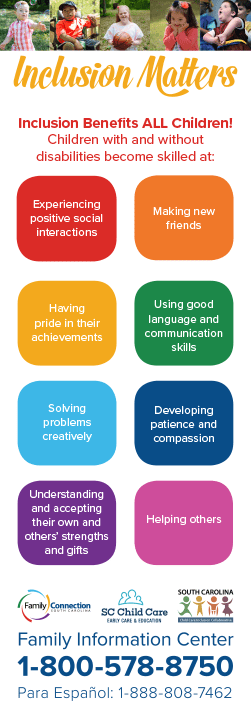
This handbill promotes the importance of inclusion for children with disabilities, explaining why learning and growing alongside typically developing peers leads to better outcomes for all children. It reinforces that inclusion is not only a best practice supported by research, but also a protected right under federal laws such as the ADA, IDEA, Section 504, and the Head Start Act. The content emphasizes that inclusion is rooted in the belief that every child and family is equally valued and deserves full access to community life, education, and shared experiences.
The handbill also highlights what high-quality inclusive programs look like and how they benefit everyone involved. It describes how effective programs partner with families, recognize and respond to each child’s unique needs, and foster empathy, respect, and collaboration. By outlining social, emotional, and communication skills that develop through inclusive environments, the resource positions inclusion as a powerful approach that builds belonging, strengthens communities, and supports the growth and success of all children.